

MEXC sees $126 million outflows as US targets exchange over $16.7 billion in suspected illicit transactions
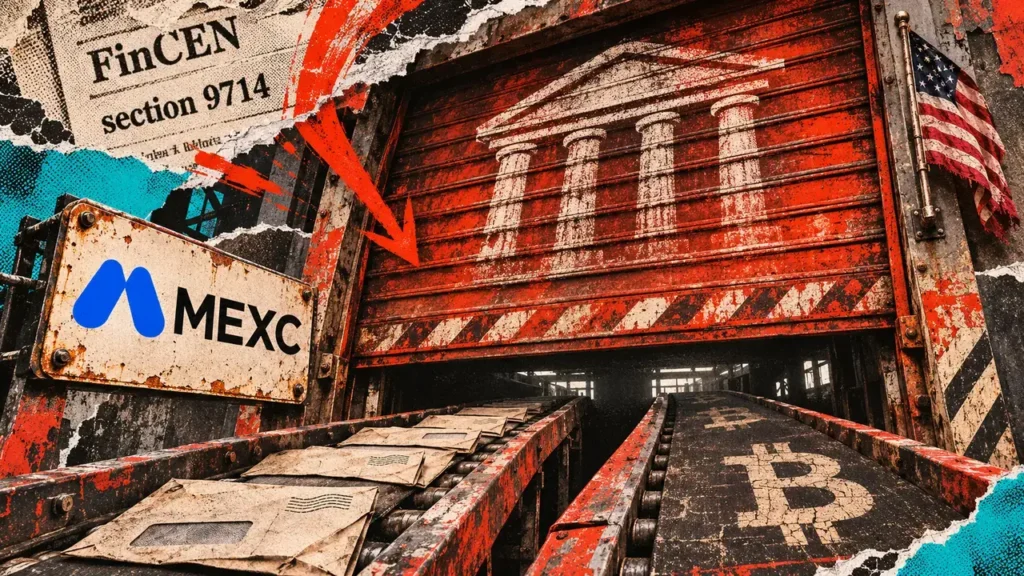
Crypto exchange MEXC saw $126 million in net outflows as US regulators moved to sever its access to the American financial system.
The withdrawals coincided with a Nov. 6 enforcement action by the Treasury’s Financial Crimes Enforcement Network (FinCEN), which accused the exchange of facilitating $16.7 billion in transactions linked to sanctions evasion, terrorist financing and cybercrime.
Data from DeFiLlama showed $126.03 million in net outflows over a 24-hour period spanning the announcement, while the exchange retained approximately $4.353 billion in tracked assets.
This represent net movements through monitored wallets and do not establish that all withdrawals occurred after the announcement or indicate whether the exchange has sufficient assets to meet its customer liabilities.

MEXC reassures users as US uncovers billions in illicit transactions
MEXC has moved to contain concerns about its financial position, insisting that customer funds remain secure and its trading, deposit and withdrawal services are operating normally.
In an official statement, the exchange said it was reviewing the Treasury order with its legal and compliance teams and had initiated an independent examination of its anti-money laundering and sanctions controls.
The company explained:
“We take the concerns raised seriously and intend to engage constructively with FinCEN, as well as other relevant regulators and competent authorities worldwide.”
CEO Vugar Usi separately sought to clarify the implications of the order after concerns spread among users.
“A number of misconceptions are floating around,” Usi said, emphasizing that the restrictions apply to transactions involving US financial institutions rather than the exchange’s entire global operation.
He added:
“The order itself does not freeze or seize any assets held on MEXC. Users can trade normally.”
Usi expressed confidence that the matter would be resolved and said the exchange would continue updating customers as discussions with regulators progress.
The response followed a sweeping investigation that identified significant deficiencies in MEXC’s compliance controls despite its stated policies against servicing customers in sanctioned jurisdictions.
In its 24-page order, FinCEN said MEXC facilitated approximately $16.7 billion in likely illicit activity between May 2021 and May 2026, including transactions involving Russian sanctions evasion networks and Iranian-linked entities.
Nearly $1.5 billion involved direct or indirect exposure to Russian sanctions evasion, including $232 million in direct dealings with sanctioned entities.
FinCEN specifically identified approximately $129 million in transactions involving Garantex and another $4.1 million involving Grinex after the Russian exchanges were sanctioned by Western authorities.
The agency said MEXC continued transacting with both exchanges as recently as June 2026.
Investigators also identified more than $1.87 billion in transactions with Iranian exposure, including approximately $1 billion in direct transfers involving more than 40 Iranian crypto exchanges.
Another $22 million involved Iran’s central bank and the Islamic Revolutionary Guard Corps, including its Qods Force.
Separately, the agency identified at least $1.99 billion involving illicit cyber actors, including more than $37.9 million in suspected ransomware payments.
Treasury Secretary Scott Bessent framed the enforcement action as part of Washington’s broader effort to restrict financial channels used by sanctioned actors. He said:
“Either you support the Iranian regime, or you have access to the U.S. financial system.”
The order prohibits covered US financial institutions from sending or receiving funds involving MEXC, including cryptocurrency transfers, beginning 30 days after its publication in the Federal Register.
MEXC transfer order timing and handlingISSUANCEPUBLICATIONEFFECTIVE30 daysNov. 6, 2026Federal RegisterTransfer ban startsOrder issuedStarts the waiting periodNo cessation dateChronology; not to scale. Advance copy: no calendar start date.
MEXC transfer order timing and handlingISSUEDNov. 6, 2026PUBLICATIONFederal Register30 daysafter publicationEFFECTIVETransfer ban startsNo cessation dateChronology; not to scale.Advance copy: no calendar start date.
Once effective: two transfer situations
Once effective: two transfer situationsPlanned transferUnexpected crypto receipt
The prohibition covers sending and receiving funds from or to MEXC, including crypto, at covered institutions.
MEXC transfer situations once effectiveMEXCCrypto or bank fundsPROHIBITEDboth directionsCovered USintermediaryThe intermediary must stop transfers from or to MEXC.
MEXC transfer situations once effectiveMEXCCrypto or bank fundsPROHIBITEDin either directionCovered US intermediaryThe institution must not process it.
FinCEN recognizes technical limits on prevention and permits limited, transaction-specific discretion after receipt. Other legal duties continue.
MEXC transfer situations once effectiveMEXC-origin cryptoMay arrive despite preventive effortsReceipt can be unavoidableCovered US intermediaryTransaction-specific discretionHandling depends on the factsExisting BSA and sanctions duties apply.
Receipt alone does not guarantee account credit or a refund.
The advance copy supplies no calendar start date. Discretion is limited and existing BSA/OFAC duties remain. Diagrams show future-effective legal situations, not observed provider incidents.
It has no scheduled expiration date, although FinCEN retains the authority to grant exemptions.
The restriction does not shut down MEXC internationally or automatically freeze customer assets, but it could complicate the exchange’s relationships with banks, financial intermediaries and liquidity providers that operate within the US regulatory system.
US financial cutoff threatens MEXC’s $1 trillion trading business
The US enforcement action comes as MEXC retreats from several international markets amid mounting regulatory scrutiny, even as its trading business continues to expand.
As CryptoSlate reported on Oct. 30, the exchange has announced withdrawals from France, the Netherlands, Russia and Belarus as part of its efforts to address compliance concerns.
The latest US intervention adds to those setbacks, potentially complicating MEXC’s ambitions to expand beyond cryptocurrency trading into traditional financial markets.
The regulatory pressure comes despite the exchange’s growing market presence.
A TokenInsight report showed that MEXC processed $1.069 trillion in trading volume during the third quarter of 2026, ranking fourth among exchanges covered by the study.
Its overall market share reached 8.91%, up 0.38 percentage points from the previous quarter.
MEXC has also gained ground in derivatives linked to traditional financial assets, processing $86 billion in commodity perpetual futures during the quarter. That gave it a 17.43% market share, second only to Binance.
The figures highlight the scale of the trading business now exposed to heightened regulatory uncertainty as MEXC attempts to broaden its presence in global financial markets.
Although FinCEN’s order does not prohibit MEXC from operating internationally, it could disrupt relationships with banks, liquidity providers and other intermediaries subject to US jurisdiction.
The extent of that disruption remains unclear because MEXC has not disclosed how much of its trading activity or liquidity depends on institutions covered by the prohibition.
The immediate test will come when the restrictions take effect, particularly whether the exchange can maintain its existing financial relationships while addressing the compliance deficiencies identified by US authorities.